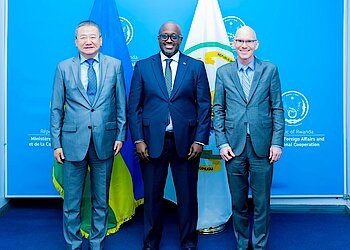
“Rwanda’s regional and foreign policy priorities”, a seminar by the Minister of Foreign Affairs of Rwanda at Chatham House
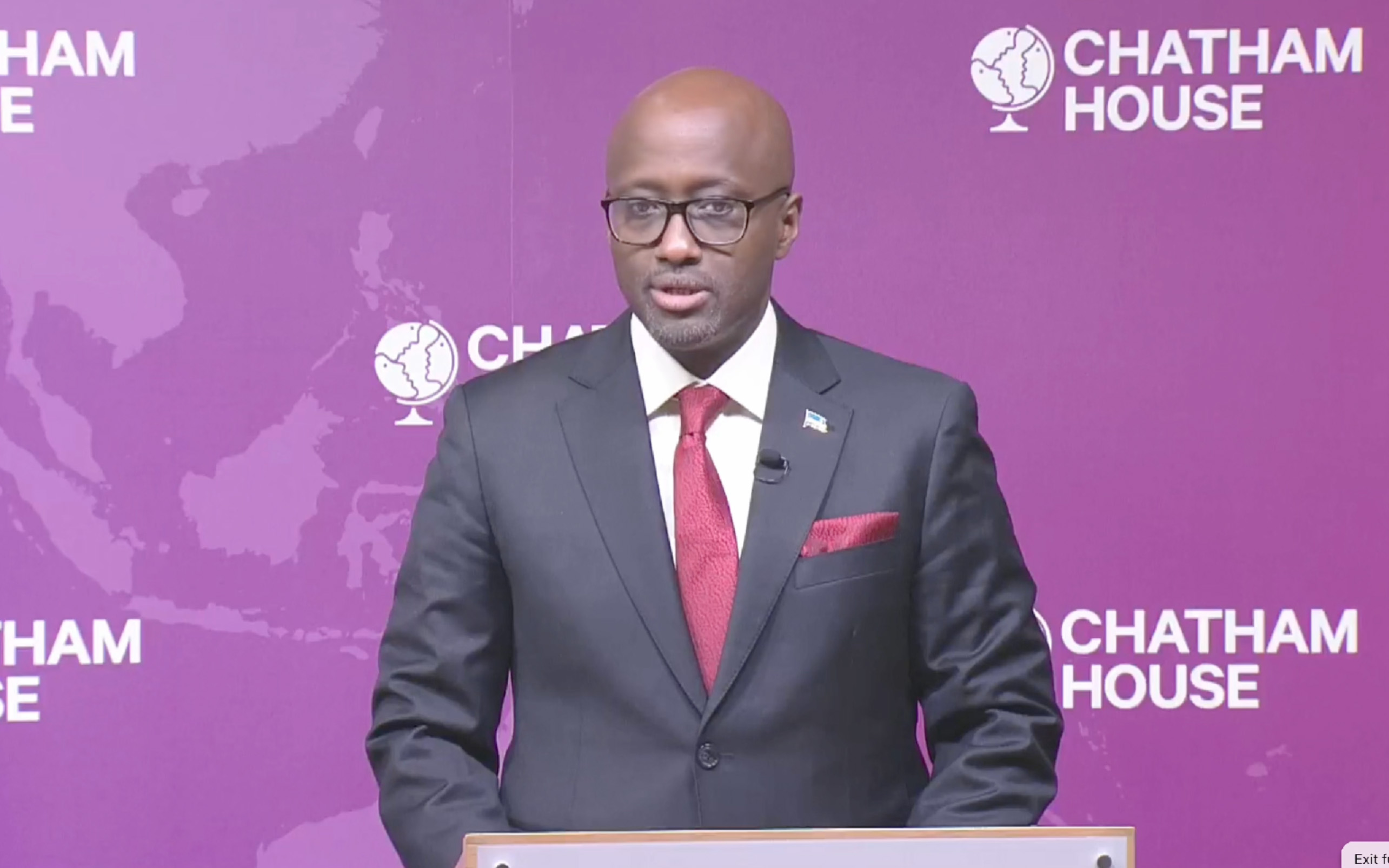
London, 4 December 2024
Thank you, Dr. Vines, for the introduction. I want to thank you all Ambassadors, distinguished guests, the audience, and all those following us online, for joining us today.
Rwanda’s story, and the story of the wider region, is complex and nuanced. This is often lost in coverage of the issues our region faces.
It is impossible to understand the Rwanda of today, our domestic and foreign policy choices, as well as our desire to play an active role in shaping the world for the better, without knowing our history.
Every nation is shaped by its history, and in Rwanda our recent history is front of mind when we have to make critical decisions. This includes decisions on how we as Rwandans build a cohesive and dynamic society, and how we treat those in need – in Rwanda and around the world.
Our experience also shapes how we approach peacekeeping and conflict resolution, and how we address direct threats to our security from external forces.
This year, Rwanda marked the 30th commemoration of the 1994 Genocide against the Tutsi. In this relatively short period of time, we have made good progress in fostering national unity, and creating a common purpose for working towards achieving our national vision.
Translating this into Rwanda’s foreign policy, we want to continue to be a reliable partner in world affairs, to foster peace, security, and collaborate with others to create economic opportunities for Rwandans and Africans.
Economic diplomacy takes centre stage in our foreign policy. Rwanda is fully committed to forging strategic partnerships and attracting investment that contribute to inclusive growth and prosperity.
Rwanda’s vision 2050 lays out our aspiration to achieve a high quality of life for all Rwandans. We are working to reach upper middle-income status by 2035 - with income reaching 4500$ per capita, and high-income status by 2050 – with income reaching 14,000$ per capita.
Putting these figures into perspective, Rwanda has come a long way since the year 2000 when our GDP per capita was only 250$. Gradually and through sustained growth of 7,5% per year on average, Rwanda is meeting some of our transformation goals, with our GDP per capita reaching 1000$ last year.
While Rwanda continues to forge strategic partnerships, we understand that we cannot evolve in a vacuum. We are working closely with partner states in the region and on the continent. A key priority is to break the barriers hindering intra-Africa trade.
Rwanda together with other countries is championing the implementation of the Africa Continental Free Trade Agreement, which was signed in Kigali in 2018. It is the largest continental free trade area in the world, and has the potential, according to the World Bank, to increase Africa’s income by $450 billion by 2035, and lift 30 million Africans out of extreme poverty.
Attracting trade and foreign investment is critical to driving economic growth and reducing poverty. In line with this, the Government of Rwanda makes continual efforts to maintain and improve a safe, stable, and business-friendly environment.
While development cooperation and aid still play an important role in addressing immediate development challenges, Rwanda is working to transition to trade and investment, as drivers of sustainable development.
Both at home and abroad, the people of Rwanda are the greatest asset. We consider our citizens living abroad as an integral part of the country. Their skills, capital and experience, those working and or living in different regions of the world contribute to boosting Rwanda’s development.
Rwanda also recognizes that regulated and organized migration can be a driver of development, contributing to economic growth, cultural diversity, and innovation.
This is why Rwanda partnered with the African Union and the UN Refugee Agency to establish the Emergency Transit Mechanism in Rwanda to house African migrants stranded in Libya.
More than 2,000 Africa asylum seekers have been evacuated from Libya to Rwanda where they are provided safety and essential services, as they wait to be resettled to third countries, with around 75% of them resettled mainly in Europe and North America.
Attracting investment, achieving development and seeking partnerships would be impossible without security. This is why ensuring Rwanda’s security, the safety of about fourteen million Rwandans and those who live with us, and safeguarding what we have built together, over the last three decades, is a fundamental pillar of our foreign policy.
For 20 years now, Rwanda has been actively involved in peacekeeping and peace support efforts, throughout the Continent and beyond. We are actually among the top three contributing countries at the UN.
This policy choice is drawn from our history, where well-armed peacekeepers abandoned Rwandan civilians, faced with danger during the 1994 Genocide against the Tutsi.
Our country knows all too well, what happens when nations choose to turn a blind eye to civilian suffering and insecurity. Rwanda remains ready to do what we can, within our means, to ensure that the horrors of our past are never repeated, either at home or abroad.
Accordingly, following requests from partner states, we are embracing a new approach to security cooperation, particularly in Mozambique and in the Central African Republic.
Rwandan security forces are working jointly with Mozambican forces and Central African forces respectively, to addresses security challenges that traditional international peace support operations have been unable to resolve.
Closer to home, in the Great Lakes Region – a region with so much potential - the conflict between the armed forces of the DRC and armed groups represents a serious threat to Rwanda’s security. This conflict has been driven by the existence of over 200 armed groups, both foreign and local, in Eastern DRC, right by Rwanda’s border. Chief among these armed groups is the genocidal militia the FDLR, a group of individuals who committed genocide in Rwanda in 1994, and then fled into then Zaire now DRC, and continue to recruiting.
The FDLR is an internationally recognized and sanctioned terrorist group, which has been receiving state support from the DRC government.
The FDLR poses an existential security threat to Rwanda, not only because it receives operational support, arms, finances, and political cover from the Government of the DRC - but also because of the ideology of Genocide it carries.
This ideology coupled with the obsession of regime change in Rwanda by the DRC authority, has now been passed to local armed groups, as the FARDC, the Congolese army, has formed a coalition together with Burundian forces, SADC forces as well as European mercenaries.
Rwanda will not allow our security and territorial integrity be put into jeopardy. This is why our legitimate, effective and proportionate defensive measures along our border are essential. These measures will only be lifted in accordance with the neutralization of the threat.
Rwanda remains ready to do its part in bringing about lasting peace in our region, and will continue engaging in such initiatives, including the upcoming Tripartite Summit between DRC, Rwanda and facilitator Angola as scheduled for December 15th in Angola.
We are engaging in several ministerial rounds of negotiations on how to deal with our respective security threats, the neutralization of the FDLR and lifting our defensive measures.
However, peace cannot be achieved if the root causes of the problems are not addressed. This includes the total neutralization of the FDLR, I was talking about, and the resolution of the M23 question by political means, once and for all.
Because the M23 we have now is the second one. There was already a conflict in 2012-2013 which was resolved militarily, but not by addressing its root causes. Even before the M23, there were other groups defending the same community of Congolese Tutsi: the CNDP, RCD and other groups.
The solution to be efficient requires direct talks between the DRC Government and the M23 to address the root causes of this conflict which includes the marginalization of a community that was persecuted for decades.
To sum up, Rwanda is on a serious mission to transform itself, harnessing all that cooperation and multilateralism has to offer. However, cooperation and diplomacy must go hand-in-hand with security.
Rwanda can only gain from the economic dividends of stable and mutually beneficial relations with all our neighbours. The peace and security framework for the DRC and the region, signed in Addis Ababa in 2013, is important to us and should be implemented.
This is why we will not stop building bridges, and advancing cooperation as a means to sustainable peace, progress and development.
Topics

Déclaration conjointe d’Olivier Nduhungirehe, Ministre des Affaires étrangères et de la Coop. Internationale du Rwanda, et de Maxime Prévot, Vice PM et Ministre des Affaires étrangères, des Affaires européennes et de la Coop. Internationale de Belgique
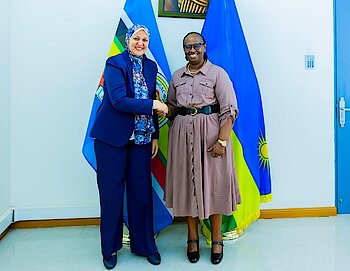
Minister of State Dr. Kaitesi Receives Egypt’s Ambassador to Rwanda
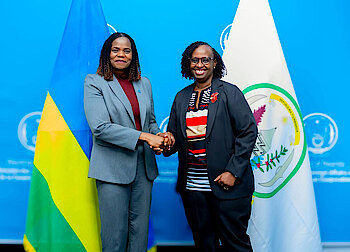
Minister of State Dr. Kaitesi Meets UN Women Regional Director
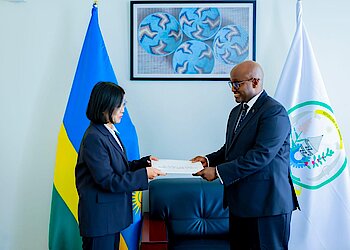
Minister Nduhungirehe receives copies of letters of credence of Ambassador-designate of Korea to Rwanda

Minister Nduhungirehe receives copies of letters of credence of Ambassador-designate of Sweden to Rwanda
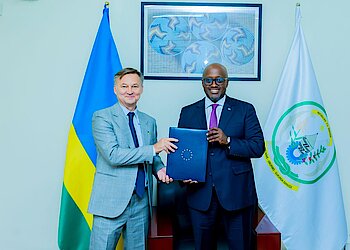
Minister Nduhungirehe receives copies of letters of credence of Ambassador-designate of EU to Rwanda
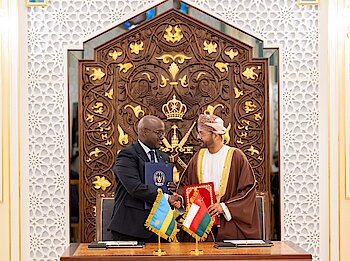
Rwanda and Oman Sign Two Agreements and Six MoUs to Strengthen Bilateral Cooperation
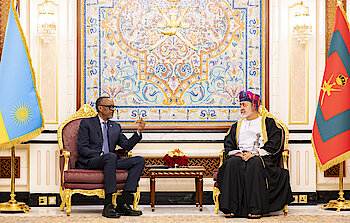
Joint Statement on the Official Visit of H.E. Paul Kagame, President of the Republic of Rwanda to the Sultanate of Oman