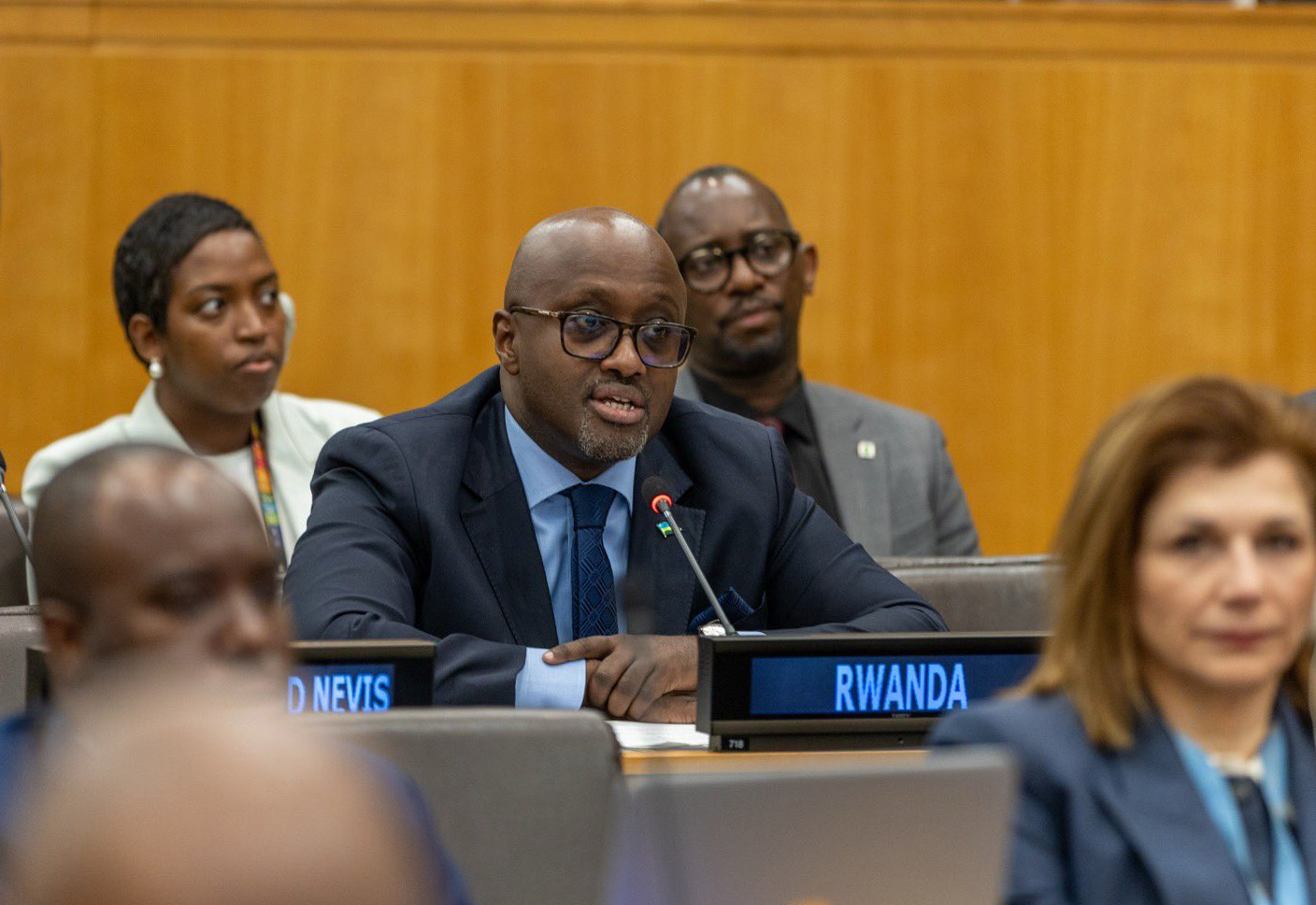
STATEMENT BY MINISTER NDUHUNGIREHE IN THE HIGH-LEVEL DEBATE IN THE UNITED NATIONS SECURITY COUNCIL ON: "AFRICAN-LED AND DEVELOPMENT-FOCUSED COUNTERTERRORISM: STRENGTHENING AFRICAN LEADERSHIP AND IMPLEMENTATION OF COUNTER-TERRORISM INITIATIVES"
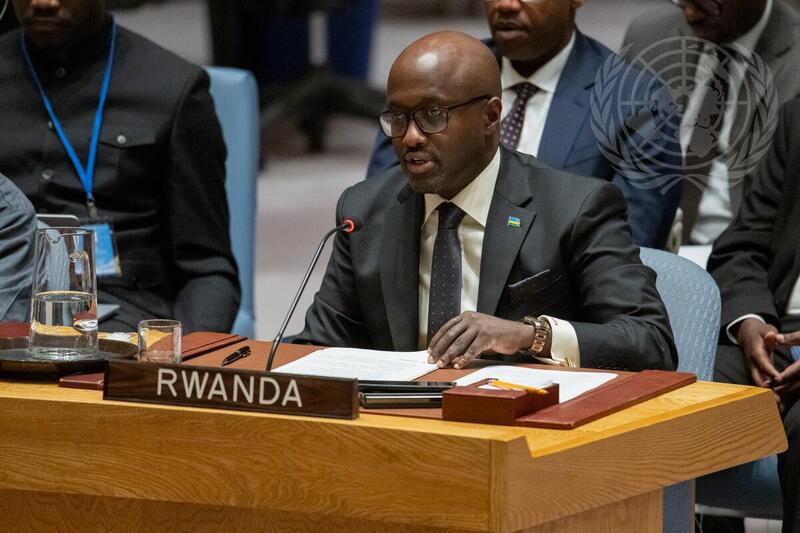
New York, 21 January 2025 - I wish to begin by expressing my gratitude to His Excellency Minister Attaf for convening this timely discussion and for the invitation extended to Rwanda to be part of it.
I would also like to extend our congratulations to Algeria on assuming the Presidency of the United Nations Security Council for the month of January 2025. Your leadership during this critical time is greatly appreciated.
We also command Algeria and His Excellency President Abdelmajid Tebboune for assuming the vital role of AU Champion on the fight against terrorism and violent extremism in Africa. His leadership comes at a critical time, and we must prioritize swift and decisive action to ensure peace and security across the Continent.
This meeting could not be more urgent. The spread of terrorism across Africa, particularly in sub-Saharan Africa, presents an alarming and persistent challenge.
The challenges we face are multifaceted. Terrorist groups exploit weak governance, poverty, inequality, and unresolved conflicts to expand their influence. The porous borders of many African nations and the limited capacity of security forces compound the problem. Furthermore, the lack of adequate funding and coordination among African states has hampered collective efforts to address these threats effectively.
Against this backdrop and in solidarity with our brothers and sisters in the Sahel, Rwanda decided in 2018 to contribute one million U.S. dollars to support the operationalization of the G5 Sahel Joint Force. This contribution was a demonstration of our commitment to regional solidarity, and we continue to stand with the people of the Sahel as they face the devastating threat of terrorism.
Unfortunately, the threat is no longer confined to the Sahel. Terrorism has now spread to coastal West African countries, such as Côte d’Ivoire, Benin and Togo.
This worrying trend highlights the urgent need for a multilayered approach that strengthens resilience at the local, national, and regional levels.
Terrorism has also reached the southern part of our continent, particularly in Cabo Delgado, Mozambique's northernmost province, where Rwanda – on the request of the Mozambican Governement - has made significant contributions to eradicate it.
Since deploying our troops to Cabo Delgado in July 2021, the security situation has drastically improved. Together with our Mozambican counterparts, we have achieved the following milestones:
1. Capturing terrorist strongholds in key districts like Mocimboa da Praia, Palma, and Muidumbe;
2. Securing strategic infrastructure, including the critical Road N380 which connects districts in the northern part of Mozambique;
3. Enabling the safe return of over 600,000 internally displaced persons (IDPs);
4. Restoring basic services such as schools, markets, and health centers in previously devastated areas.
To consolidate these achievements, we decided to deploy an additional 2,500 troops in Mozambique, reinforcing the 1,000 troops deployed in 2021. This demonstrates our unwavering commitment to ensuring peace and stability in the region.
Closer to Rwanda, the Great Lakes region continues to face the threat of terrorism, particularly from the Allied Democratic Forces (ADF), operating in Eastern DRC. The ADF, identified as one of the groups responsible for the most egregious human rights violations in the DRC, has claimed the lives of over 650 civilians since June 2024, including more than 200 in the Beni region alone.
Despite this clear and present danger, it is appalling to see that the Government of the DRC has chosen to divert attention from this real terrorist threat by labelling another movement, the M23 - which is a group fighting to protect a persecuted Congolese community - as a terrorist organization.
For more several decades, this community that the M23 defends has faced systematic marginalization, forcing many to seek refuge in neighbouring countries, including Rwanda, where we host over 100,000 refugees.
This brings us to an important question: who has the legitimacy to define terrorism, and which groups should be designated as terrorist organizations in Eastern DRC? Can a UN Member State allow itself the right to abuse this notion of terrorism for political and diplomatic gains? Including vis-a-vis the UN Security Council?
When we look at it, who can be qualified as terrorist in Eastern DRC beyond the ADF? Is it the M23, a Congolese movement protecting a Congolese community victim of hate speech? Or is it the Congolese national army, that has embedded the FDLR genocidal force - which is not only a UN sanctioned group, but also a movement that was designated by the U.S. Government in 2001 as a terrorist organization? What do terrorist acts look like in EDRC? Can the protection of a Congolese community be qualified as terrorism? Or is it the targeting, persecution and killing of civilian Tutsi in Eastern DRC, including through the burning down, in October 2023, of more than 300 homes of Congolese Tutsi in Nturo village (Masisi territory) by the FARDC, the Nyatura and the FDLR militias, which should be qualified as terrorism?
We cannot hope to resolve the threat of terrorism if we fail to identify and address its true perpetrators. The international community must ensure that efforts to combat terrorism are rooted in impartiality, justice, and a genuine commitment to peace. Mislabelling groups or ignoring systemic injustices only perpetuates cycles of violence and undermines the credibility of our collective actions.
In this regard, Rwanda proposes the following concrete steps to strengthen African leadership in counter-terrorism efforts:
- First, we must significantly enhance the operational and logistical capacities of African Union peacekeeping forces and regional security architectures, such as the G5 Sahel and the Multinational Joint Task Force. This includes providing specialized training, modern equipment, and sustainable resources to empower African forces to effectively prevent and respond to terrorist threats.
Rwanda’s collaboration with Mozambique offers a compelling example. This model of bilateral African cooperation underscores the potential of tailored, context-specific interventions. The Security Council and international community should, therefore, encourage and support such arrangements, as they have proved productive in addressing terrorism challenges in some affected member states.
- Second, Mr. President, counter-terrorism must be integrated with development and governance initiatives. Terrorism thrives in regions where poverty, unemployment, and lack of basic services prevail. We need to invest in sustainable development programs that address the root causes of extremism. Governments must work to close governance gaps that terrorists exploit to sow discord and gain support.
- Third, we must continue strengthening the African Peace and Security Architecture (APSA). This requires ensuring that institutional frameworks are fully operational and equipped to provide timely and regionally tailored responses. Mobilizing financial resources for the AU Peace Fund and other mechanisms will help reduce dependency on external donors and reinforce Africa’s ownership of its security challenges.
- Fourth, we must prioritize regional cooperation and information sharing. African nations must establish secure channels for intelligence gathering, enabling swift and collective responses to cross-border threats. This collaborative approach should also involve partnerships with international allies who can support capacity-building and resource mobilization.
- Fifth, prevention must be at the heart of our strategy. Governments need to implement early intervention programs to counter violent extremism, focusing on youth empowerment and community resilience. Promoting tolerance, respect for human rights, and inclusion through grassroots initiatives will help address grievances that extremists exploit.
These interventions must be driven by our shared responsibility as Africans to ensure that terrorism does not derail the aspirations of our Continent’s people.
To conclude, Rwanda remains committed to working with regional and international partners to address this growing threat. By focusing on the root causes of terrorism, strengthening resilience, and supporting African-led initiatives, we can build a safer and more secure Continent for all.
I thank you for your kind attention.
Topics
Rwanda and AU Facilitator Discuss Peace Process in Eastern DRC
Rwanda and Kenya Sign 11 Agreements to Strengthen Bilateral Cooperation
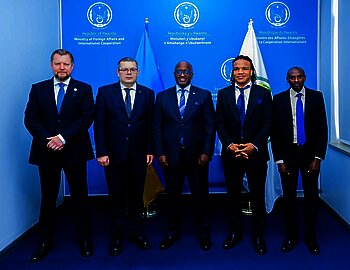
Minister Nduhungirehe receives Ukrainian Members of Parliament to discuss further strengthening cooperation
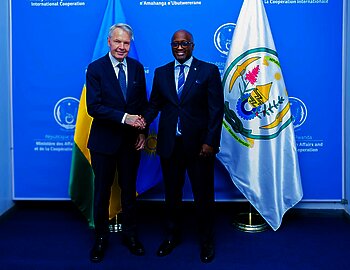
Rwanda and UN Envoy Discuss Peace Efforts in Sudan

Rwanda and Japan Discuss Strengthening Bilateral Relations
Rwanda Reaffirms Commitment to Peace and Stability in South Sudan
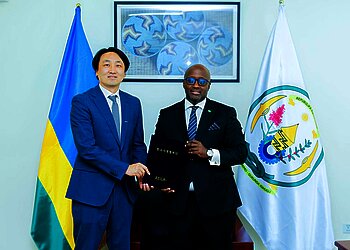
Minister Nduhungirehe receives letters of credence of new Country Director of KOICA
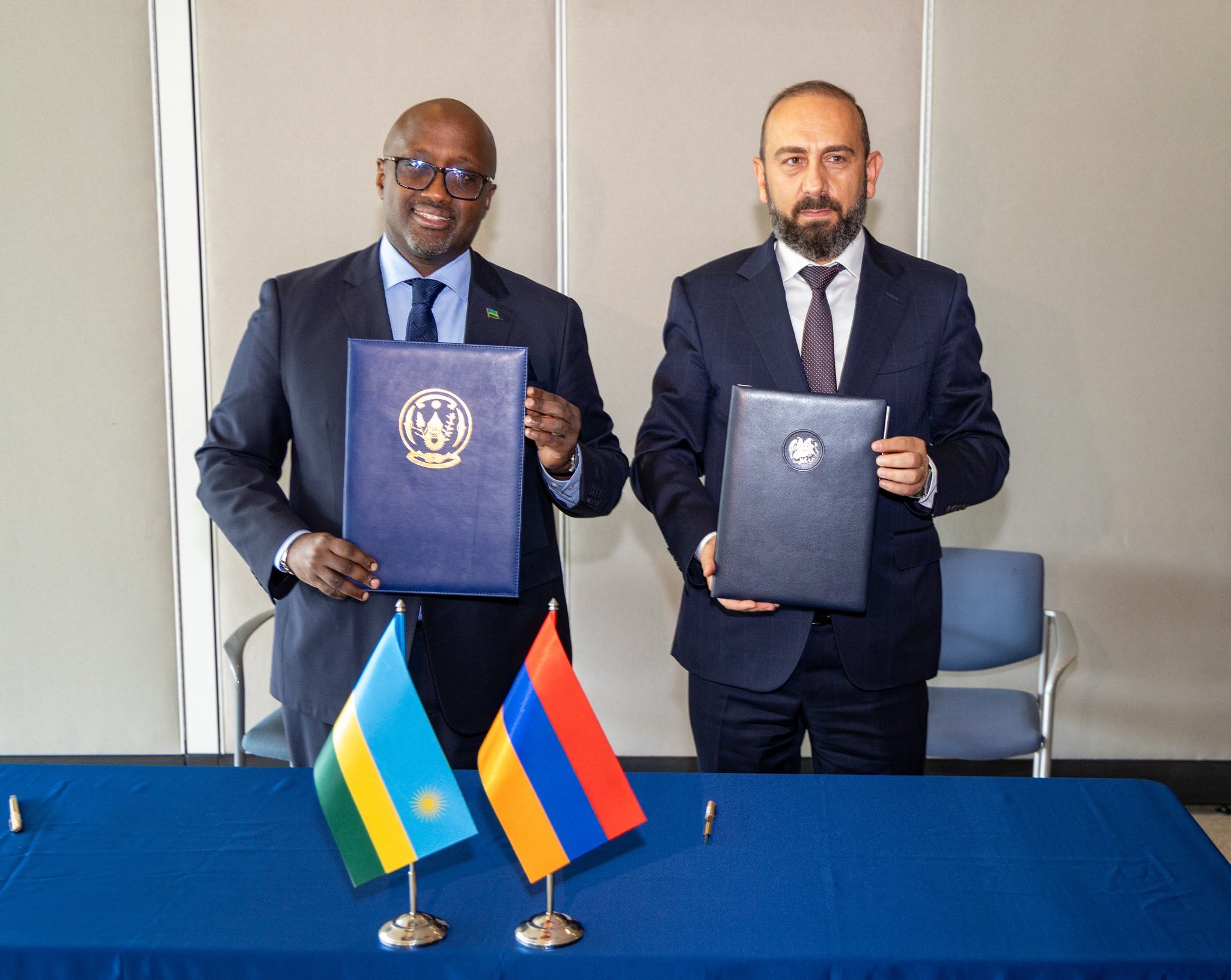
Rwanda and Armenia sign Agreement on mutual visa exemption