RWANDA STATEMENT AT THE UNSC BRIEFING ON MONUSCO BY MINISTER OLIVIER J.P. NDUHUNGIREHE
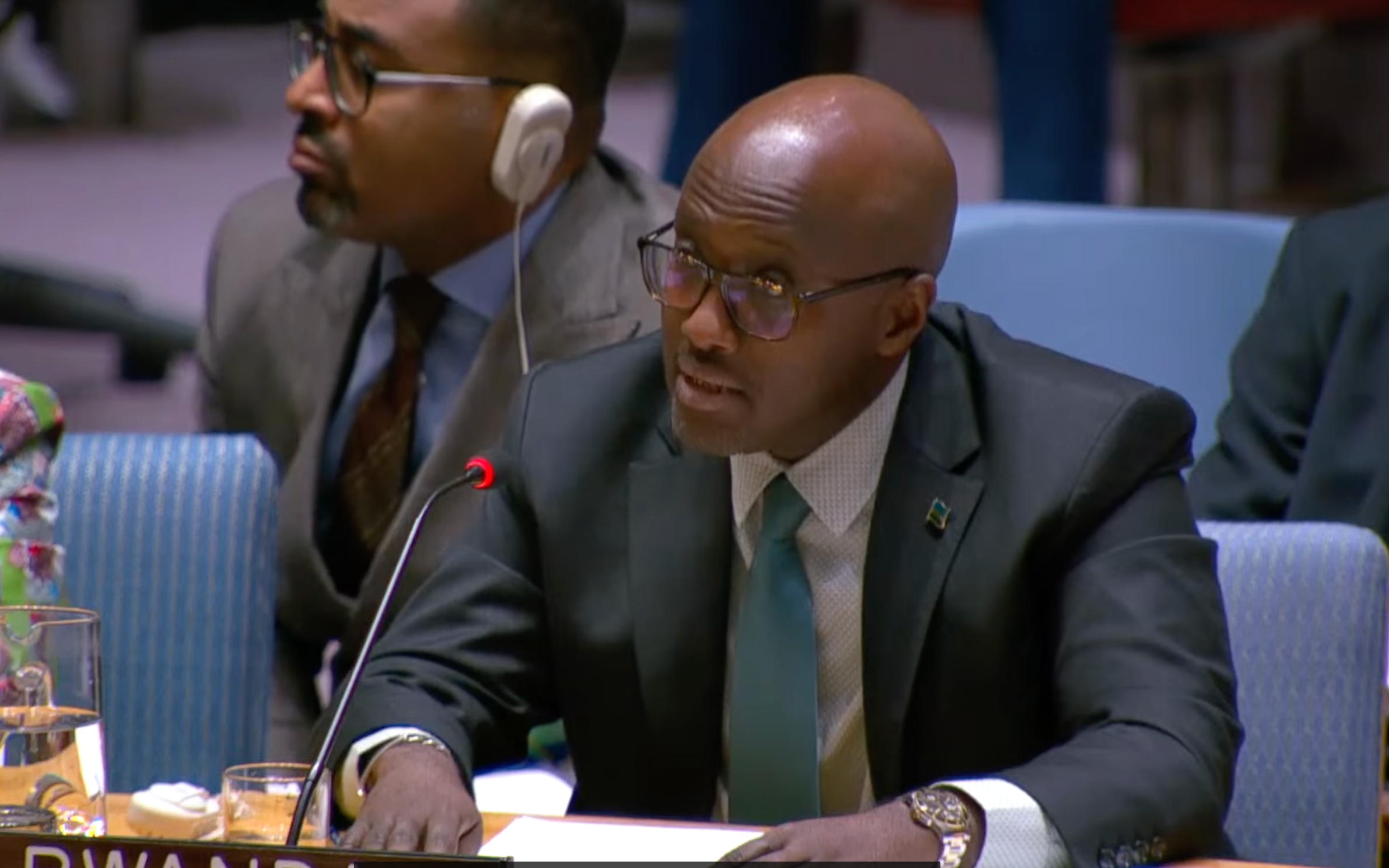
New York, 27 March 2024
I thank you for giving me the floor. Allow me to begin by congratulating you on your presidency and leadership over this Council during the month of March 2025. I also acknowledge the contributions of previous speakers and briefers.
As a Member State of the United Nations and a prominent contributor to peace support missions, Rwanda stands in firm support to peacekeeping and peacekeepers wherever they serve. This is precisely why Rwanda insists on accountability and transparency for all those who are mandated by the UN Security Council to serve the cause of peace.
Allow me here to bring more clarity on the conflict in Eastern DRC. This conflict was not started by Rwanda. But the burden has been placed squarely on Rwanda’s shoulders.
In addition, actions taken by different actors have enabled the DRC to escape its responsibilities, particularly as regards to leadership and governance failures.
The root causes of this conflict go back, first to the continued preservation of the FDLR genocidal militia, despite its record of ethnic massacres, recruitment of child soldiers, and destabilization of both Rwanda and the DRC. It is unfortunate that some in the international community conveniently continue to ignore its existence.
The recent capture and handover to Rwanda of FDLR members, including a senior commander has provided even more evidence of how the DRC government integrated FDLR fighters into its national army. Kinshasa gave them weapons, resources, and a platform to continue their genocidal ideology.
Secondly, the systematic persecution that Congolese Kinyarwanda speakers face, particularly Tutsi communities is linked to colonial legacy. This includes communities in South Kivu and Ituri Provinces.
Among the consequences of the discrimination, violence and ethnic cleansing in the DRC, are the hundreds of thousands of refugees in Rwanda, Uganda and other countries in our region, that have been living mostly in refugee camps, unable to safely return to their homes for many years.
Given this situation, what is to be expected from Rwanda? Why is Rwanda disproportionately target? It is not clear. What is clear to us in Rwanda, is that the defensive measures we have put in place will remain, until there is a credible framework for long-term security guarantees, along our border with the DRC.
The case of MONUSCO has been particularly troubling, as reflected in the report we have just received. There has been a recurrent pattern of MONUSCO’s deliberations being used to push a narrative that fails to reflect reality on the ground. Sadly, today’s report is no exception.
While it accurately cites abusive armed groups like the ADF, CODECO, the Kinshasa-backed FDLR genocidal militia and even DRC forces as the main perpetrators of human rights violations, the report continues to single out other actors as the primary cause of instability in Eastern DRC. As such, the report shows a clear pattern of bias in the reporting of the security crisis in that region.
MONUSCO’s longstanding failure to implement the mandate it was entrusted with 25 years ago, that is the eradication of all armed groups, including the FDLR genocidal militia, which has operated with total impunity in Eastern DRC for the past three decades. We cannot hope to achieve peace if the root causes of this crisis are not addressed.
I was personally sitting in this Council on 28th March 2013 when Resolution 2098 was adopted, to deploy a Force Intervention Brigade (FIB) within MONUSCO, with a specific mandate to neutralize all armed groups, including the FDLR.
However, operational focus was exclusively directed at the M23, and MONUSCO/FIB refused to neutralize the FDLR, which continued to create havoc in eastern DRC, even today in 2025.
In fact, since 2003, this Council has reiterated the need to address the threat of the FDLR through more than 20 different resolutions. Yet, after billions of dollars spent on what is the UN’s most expensive peacekeeping mission in history, meaningful results remain elusive.
As a result, Congolese civilians, especially Tutsi, have continued to be targeted for persecution, discrimination, and forced displacement. In October 2023, a whole village, 300 homes of Congolese Tutsi were burned down by DRC-backed militias in Nturo village Masisi territory. Where was MONUSCO? Since February this year, the Banyamulenge villages in Minembwe, South Kivu, are being bombed by attack drones and fighter jets from DRC. Where is MONUSCO? And there this is an issue of governance and political inclusion that needs to be addressed by DRC.
Since the resurgence of hostilities in October 2021, MONUSCO has failed to contribute constructively to de-escalation or to peace efforts. More alarmingly, MONUSCO provided direct support to the military operation of the DRC coalition, placing itself in a situation of belligerence, even sometimes fighting alongside the same groups it was created to neutralize.
I should here note the presence of European mercenaries in this coalition. Those mercenaries were deployed in violation of a UN Convention of 1989 and were working alongside the DRC army and MONUSCO. Rwanda has raised these concerns repeatedly before this Council, but they have never been addressed.
SRSG Bintou Keita and MONUSCO have also contributed to the distortion of facts surrounding recent developments. Wildly exaggerated claims of 3,000 civilian casualties were circulated by MONUSCO officials following the capture of Goma in January 2025.
These figures, contested by journalists and humanitarian workers on the ground, have been weaponized by the Government of the DRC to call for punitive measures against Rwanda. And you just heard another sample of fabricated claims by my colleague from the DRC.
Nevertheless, Rwanda continues to believe that MONUSCO can still change its course and play a positive role, provided it abides by its mandate to protect civilians, ensure humanitarian assistance and possibly providing logistical support for the joint EAC-SADC efforts currently under discussion.
Since the last briefing in December 2024, we have a new momentum for peace in the region. The first ever EAC-SADC summit took place on 8 February 2025. The joint Summit, whose outcomes were endorsed by the African Union, decided to merge the Luanda and Nairobi processes, renewed the call for a cessation of hostilities and inclusive political dialogue. This dialogue will be guided by an enlarged panel of five facilitators from across Africa, under the stewardship of the African Union Chairperson.
Rwanda welcomes and fully supports these developments. In particular, we welcome the recent decision of the AFC/M23 to reposition its forces from Walikale, in support of peace initiatives underway, as well as the DRC's announcement that all offensive operations by FARDC and Wazalendo will be halted. We further urge the international community and the Security Council to support this African-led process.
To conclude, Madam President, I would like to reiterate that for the last 31 years, Rwanda has worked hard to build unity, reconciliation, stability and economic growth to promote the rights of vulnerable groups across the board.
A sustainable political solution with long-term security guarantees for Rwanda will allow us to get back to the serious and urgent work of developing our country and integrating our region together with our neighbours.
Rwanda has always wanted a lasting political and security settlement for the region. In this regard, we are committed to working with all parties to ensure we stick to commitments made, particularly the joint EAC-SADC Summit process, and other complementary confidence-building initiatives.
I thank you.
Topics
Minister of State Dr. Kaitesi Receives Egypt’s Ambassador to Rwanda
Minister of State Dr. Kaitesi Meets UN Women Regional Director
Minister Nduhungirehe receives copies of letters of credence of Ambassador-designate of Korea to Rwanda

Minister Nduhungirehe receives copies of letters of credence of Ambassador-designate of Sweden to Rwanda
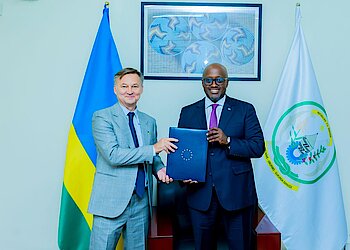
Minister Nduhungirehe receives copies of letters of credence of Ambassador-designate of EU to Rwanda
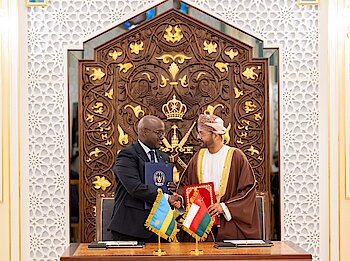
Rwanda and Oman Sign Two Agreements and Six MoUs to Strengthen Bilateral Cooperation
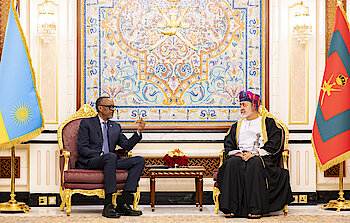
Joint Statement on the Official Visit of H.E. Paul Kagame, President of the Republic of Rwanda to the Sultanate of Oman
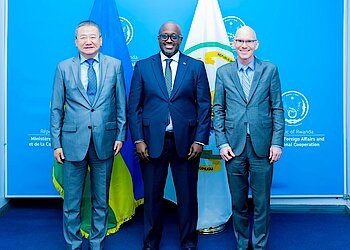
Minister Nduhungirehe Meets UN Officials to Discuss Regional Peace and Stability
